
Stereotactic Body Radiation Therapy (SBRT)
All Services
Stereotactic Body Radiation Therapy (SBRT)
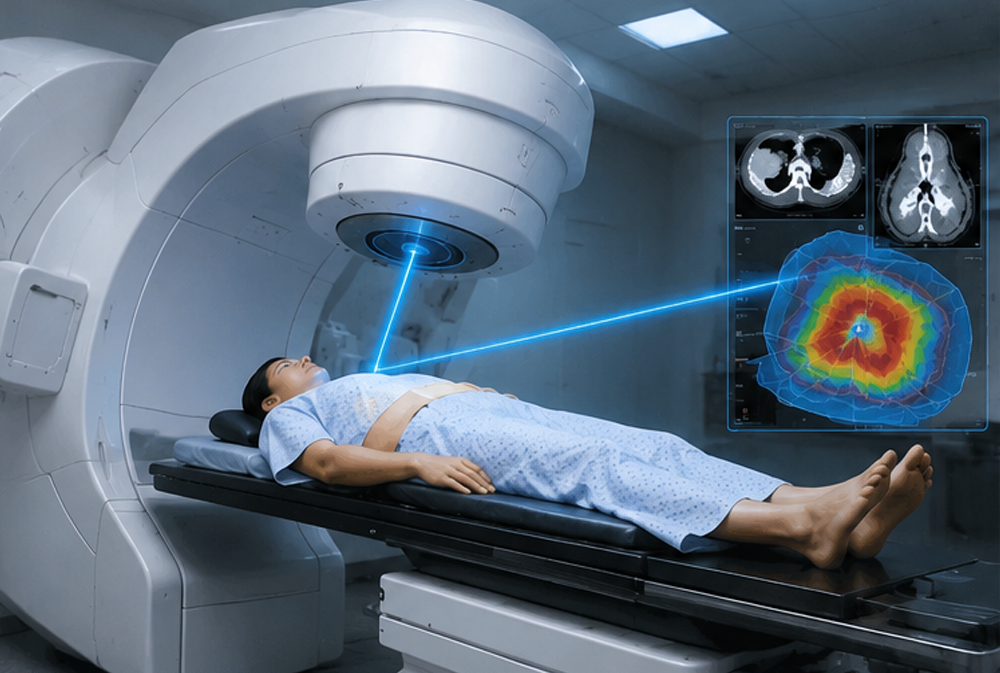
Stereotactic Body Radiation Therapy (SBRT) is a highly advanced and precise form of radiation treatment used to target small to medium-sized tumors located in the body outside the brain. It delivers very high doses of radiation to the tumor while minimizing exposure to surrounding healthy tissues.
SBRT is commonly used for cancers in the lung, liver, spine, kidney, and prostate, especially when surgery is not suitable or when patients require a non-invasive treatment option. It is known for its accuracy, effectiveness, and shorter treatment duration compared to conventional radiation therapy.
This technique uses advanced imaging systems and computer-guided planning to locate the tumor with extreme precision. The radiation beams are shaped and directed from multiple angles to focus only on the tumor, reducing damage to nearby organs. Because of its high accuracy, SBRT often requires fewer treatment sessions, typically ranging from 1 to 5 sessions.
During treatment, the patient is carefully positioned using immobilization devices to ensure no movement, which helps maintain accuracy. Each session is painless and performed in an outpatient setting.
Benefits of Stereotactic Body Radiation Therapy (SBRT)
- Highly precise tumor targeting
- Short treatment duration (1–5 sessions)
- Non-invasive alternative to surgery
- Minimal damage to surrounding healthy tissues
- Effective for early-stage and inoperable tumors
- Faster recovery and reduced hospital visits
Who Needs SBRT?
SBRT is recommended for patients with small, well-defined tumors in organs such as the lung, liver, spine, kidney, or prostate, especially when surgery is risky or not possible.
Conclusion
Stereotactic Body Radiation Therapy (SBRT) is a modern, high-precision radiation technique that offers excellent tumor control with fewer treatment sessions. It is a safe and effective option for patients requiring targeted cancer therapy with minimal side effects.
FAQs – Stereotactic Body Radiation Therapy (SBRT)
Q1. Is SBRT painful?
No, SBRT is completely painless and does not involve any surgical procedure.
Q2. How many sessions are required for SBRT?
Most patients require between 1 to 5 sessions depending on tumor size and location.
Q3. What cancers can be treated with SBRT?
It is commonly used for lung, liver, spine, kidney, and prostate cancers.
Q4. Does SBRT have side effects?
Some patients may experience mild fatigue or localized discomfort, but side effects are generally minimal.
Q5. Is SBRT better than traditional radiation therapy?
SBRT is more precise and requires fewer sessions, making it ideal for specific small or localized tumors.