
Stereotactic Radiosurgery (SRS)
All Services
Stereotactic Radiosurgery (SRS)
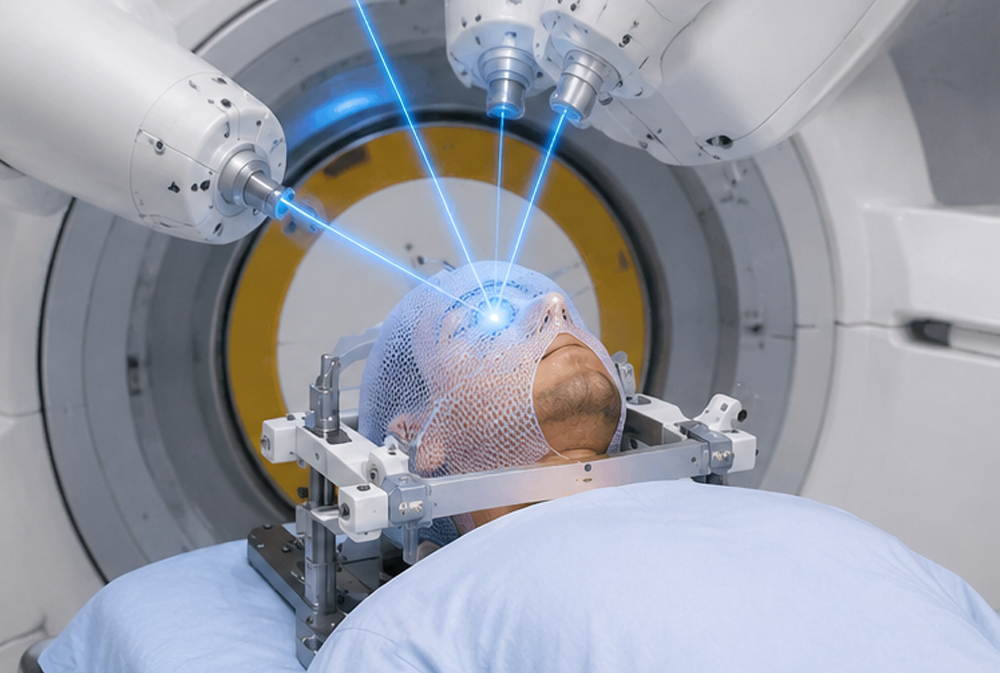
Stereotactic Radiosurgery (SRS) is an advanced, non-invasive radiation treatment technique used to treat small tumors and abnormalities in the brain and spine with extreme precision. Despite its name, it does not involve any surgical incision. Instead, it delivers highly focused beams of radiation to destroy abnormal tissues while preserving surrounding healthy structures.
SRS is most commonly used for brain tumors (both benign and malignant), brain metastases, arteriovenous malformations (AVMs), trigeminal neuralgia, and certain spinal lesions. It is considered one of the most precise forms of radiation therapy available today.
This treatment uses detailed imaging such as MRI and CT scans to pinpoint the exact location of the target area. Multiple radiation beams are then directed from different angles, converging precisely on the tumor. This allows a very high dose of radiation to be delivered in a single session or a few sessions, depending on the condition.
During the procedure, the patient is positioned with the help of a specialized immobilization frame or mask to ensure absolute accuracy and prevent movement. The treatment is painless and typically performed on an outpatient basis.
Benefits of Stereotactic Radiosurgery (SRS)
- Extremely precise targeting of brain and spinal lesions
- Non-invasive alternative to brain surgery
- Usually completed in 1–5 sessions
- Minimal damage to surrounding healthy brain tissue
- Effective for both benign and malignant conditions
- Short recovery time with quick return to daily activities
Who Needs SRS?
SRS is recommended for patients with small brain tumors, brain metastases, AVMs, or certain neurological conditions where surgery is risky or not possible. It is also used when tumors are located in hard-to-reach areas of the brain or spine.
Conclusion
Stereotactic Radiosurgery (SRS) is a highly advanced radiation technique that offers precise, safe, and effective treatment for brain and spinal conditions. It provides a powerful non-surgical option with excellent clinical outcomes and minimal recovery time.
FAQs – Stereotactic Radiosurgery (SRS)
Q1. Is SRS a surgical procedure?
No, despite its name, SRS is completely non-invasive and does not involve any incision.
Q2. How long does SRS treatment take?
It usually takes one session or a few sessions depending on the condition being treated.
Q3. Is SRS painful?
No, the procedure is painless and performed without anesthesia in most cases.
Q4. What conditions are treated with SRS?
It is used for brain tumors, metastases, AVMs, trigeminal neuralgia, and spinal lesions.
Q5. Are there side effects of SRS?
Side effects are usually mild and may include temporary fatigue, headache, or localized swelling.