
Intensity-Modulated Radiation Therapy (IMRT)
All Services
Intensity-Modulated Radiation Therapy (IMRT)
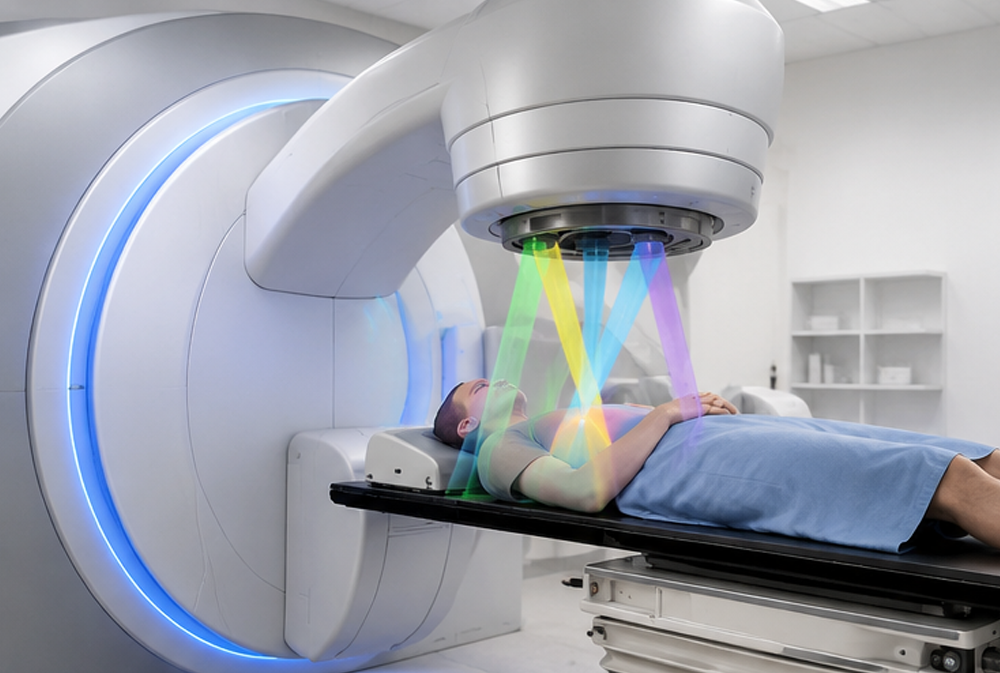
Intensity-Modulated Radiation Therapy (IMRT) is an advanced form of external beam radiation therapy that delivers highly precise radiation doses to cancerous tumors while minimizing exposure to surrounding healthy tissues. It is widely used in modern oncology for treating cancers in complex or sensitive areas of the body.
IMRT works by modulating (controlling) the intensity of radiation beams and shaping them according to the exact size, shape, and location of the tumor. This allows doctors to deliver a higher dose directly to cancer cells while reducing the risk of damage to nearby organs.
This technique is commonly used for cancers of the head and neck, prostate, breast, brain, lung, and gastrointestinal tract. It is especially beneficial when tumors are located near critical structures such as the spinal cord, salivary glands, or optic nerves.
Treatment planning for IMRT involves advanced imaging like CT, MRI, or PET scans to map the tumor precisely. A computer-based system then designs a customized radiation plan, dividing the beam into multiple small segments with varying intensities. Each session is delivered using a linear accelerator.
IMRT is painless and performed on an outpatient basis. The patient lies still while the machine rotates around the body to deliver radiation from different angles.
Benefits of Intensity-Modulated Radiation Therapy (IMRT)
- Highly precise tumor targeting
- Protects surrounding healthy tissues and organs
- Suitable for complex and irregular tumor shapes
- Reduces risk of side effects compared to conventional radiation
- Effective for multiple cancer types
- Improves treatment accuracy and outcomes
Who Needs IMRT?
IMRT is recommended for patients with tumors located near sensitive organs or in difficult-to-treat areas, including head and neck cancers, prostate cancer, brain tumors, and certain abdominal cancers.
Conclusion
Intensity-Modulated Radiation Therapy (IMRT) is a highly advanced radiation technique that improves cancer treatment precision and safety. It allows effective tumor control while minimizing harm to healthy tissues, making it a cornerstone of modern radiation oncology.
FAQs – Intensity-Modulated Radiation Therapy (IMRT)
Q1. Is IMRT painful?
No, IMRT is a completely painless procedure.
Q2. How long does each IMRT session take?
Each session usually takes 10–30 minutes, depending on the treatment plan.
Q3. What cancers can be treated with IMRT?
It is commonly used for head and neck, prostate, brain, breast, and lung cancers.
Q4. Are there side effects of IMRT?
Side effects are usually mild and depend on the treatment area, such as fatigue or localized skin irritation.
Q5. How is IMRT different from normal radiation therapy?
IMRT delivers radiation in varying intensities and shapes, making it more precise and safer for surrounding tissues.